Directing Practices and History
The Practice
Over the last decade, I have worked closely to revitalize Osseo Senior High School’s educational theatre program. With a diverse background in my own on-stage work, I bring expertise, perspective, and professionalism that have been equally met with enthusiasm, creativity, and successful student progress. It is never just about forming a show for an audience; it is about equipping young voices with the techniques that help them understand how to elevate their own performances. The north star is always what the students walk away having learned: about themselves, about theatre, about the world. We build empathy for the space, one another, and the work.
By keeping a diligent and high standard of work for our students, we have not only seen an increase in student success in the rehearsal room, but also the classroom and community engagement post graduation. It is our job as arts educators to equip students with skills that help their personal growth and confidence.
It begins with programming that uplifts the students or actors involved.
Selecting and Building The Play
Whether it be grand scale or an intimate setting, building live theater begins with the voices involved. Over the last decade, I have learned and leaned into the students and creatives who have helped guide this work. Allowing their skills and world to be the centerpoint of programming. We must be able to answer three essential questions:
What do these voices need to say?
Who or What is the center of the work?
How or Where do they need to say it?
Theater is a living, breathing art form. It showcases shifts in culture in real time. Not just show to show, but night to night. By stepping foot on a stage, actors and designers are choosing to manipulate culture and make a statement about their world. Without that knowledge and forward thought, we sit in redundancy and allow our audiences to remain stagnant in thought and in art.
Once those questions can be answered, and you know what story needs to be told, there are no rules for how you do it. As audience perspective changes with time, so must our view of the materials that fill our canon. The same level of care and understanding must be given to the actors and production team looking to you as the creative leader of a show. By understanding their needs, how to successfully teach your method, and run a rehearsal room with diligence and grace, in my experience, a script will often exceed the expectations you have for it. A director is the keeper of the keys and has to know which ones to use to unlock all aspects of a concept to welcome everyone inside.
The Concepts
Choosing a script is a big task, one no director takes lightly. It is your vehicle through the storms that rage through production. Finding your focus and perspective within the text is even more important. In an educational setting, much of the concept stems from asking yourself What do my students get to learn through this process?
A lot of educational theater making is shoehorning ideas or dated concepts to create something familiar. I am more interested in the unexplored ways we tell new as well as well-known stories. If theatre is meant to be universal, why not test that to the highest degree? We have found success in both new ideas and introducing vital stories in familiar settings. It is my belief that both help create the cocktail of fruitful programming.
Often, this requires extensive research. The artistic director is meant to hold the information and drive the ship. They know where a show is headed, and it is their job to ensure everyone involved is safely on board. This type of leadership takes knowledge of both a company and production’s history (what has been produced in the past, how does this fit in a season, do we have the means to produce it), the audience they cater to (Who’s story is being told and who is it for), and the current social and political climate (Are we staying relevant with the times and in touch with the voices in our communities).
Sometimes, answering these questions leads us to understanding how shows have remained relevant in their traditional form, just with new voices or perspective. Sometimes, it means shifting what we know to a new time, place, community of people, or even genre.
The Productions
Over the last decade, I have worked to develop my own flavor and style for directing. One that works deeply within classic technique and ageless skills alongside distinct movement and music. How does the text sound? How does the text move? We are creating drama from words. How do we expand on what we know to how we move? Dance, movement, music, violence, and intimacy are all cornerstones of our lives, and they help bring productions to a contemporary realm while creating a language of its own. Actors and designers are multifaceted artists. By meeting them where they are at and utilizing the multitude of gifts they bring to a space, you build shows with depth and dimension past your own ego and what is on the page.
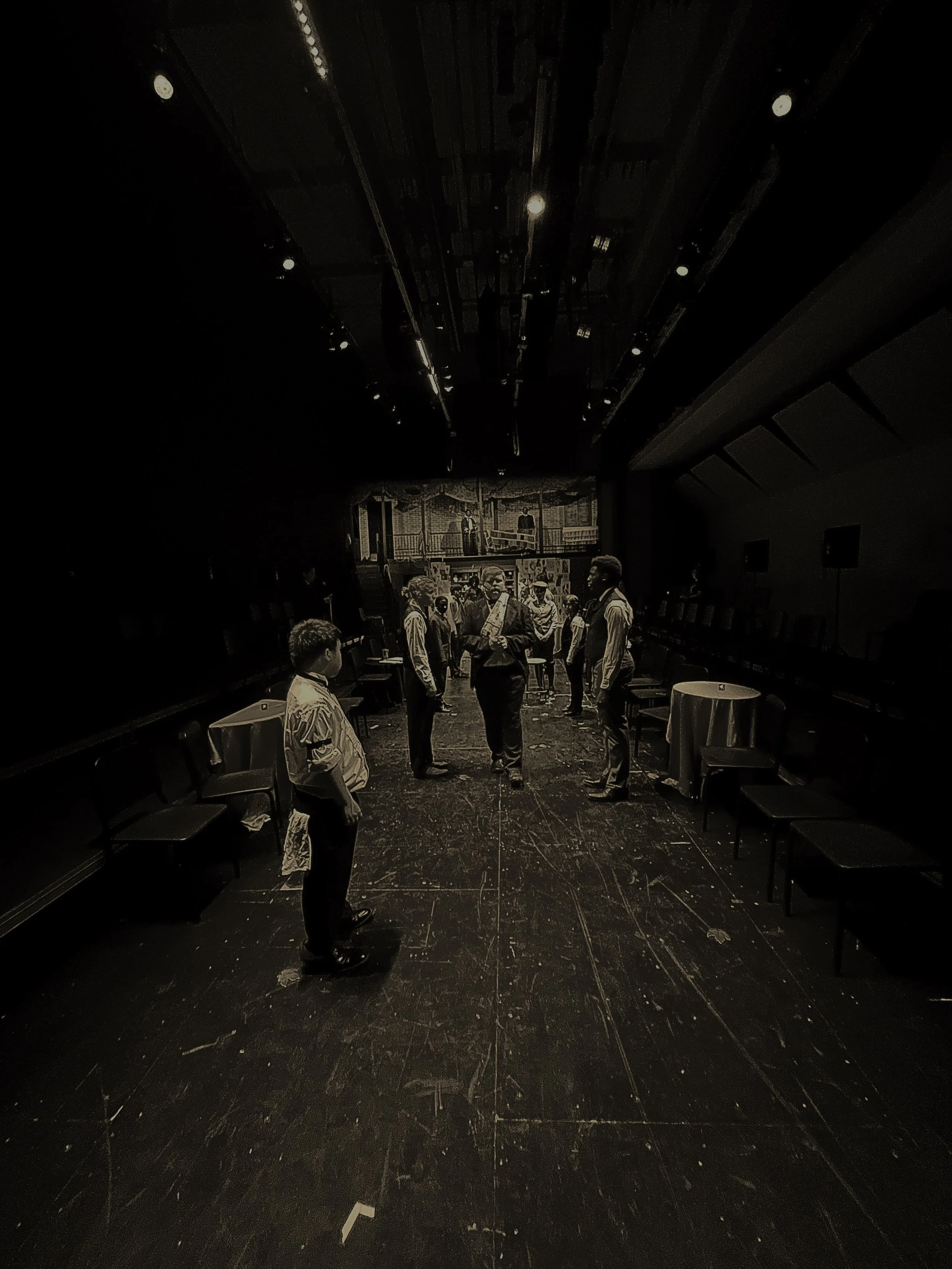
Frankenstein